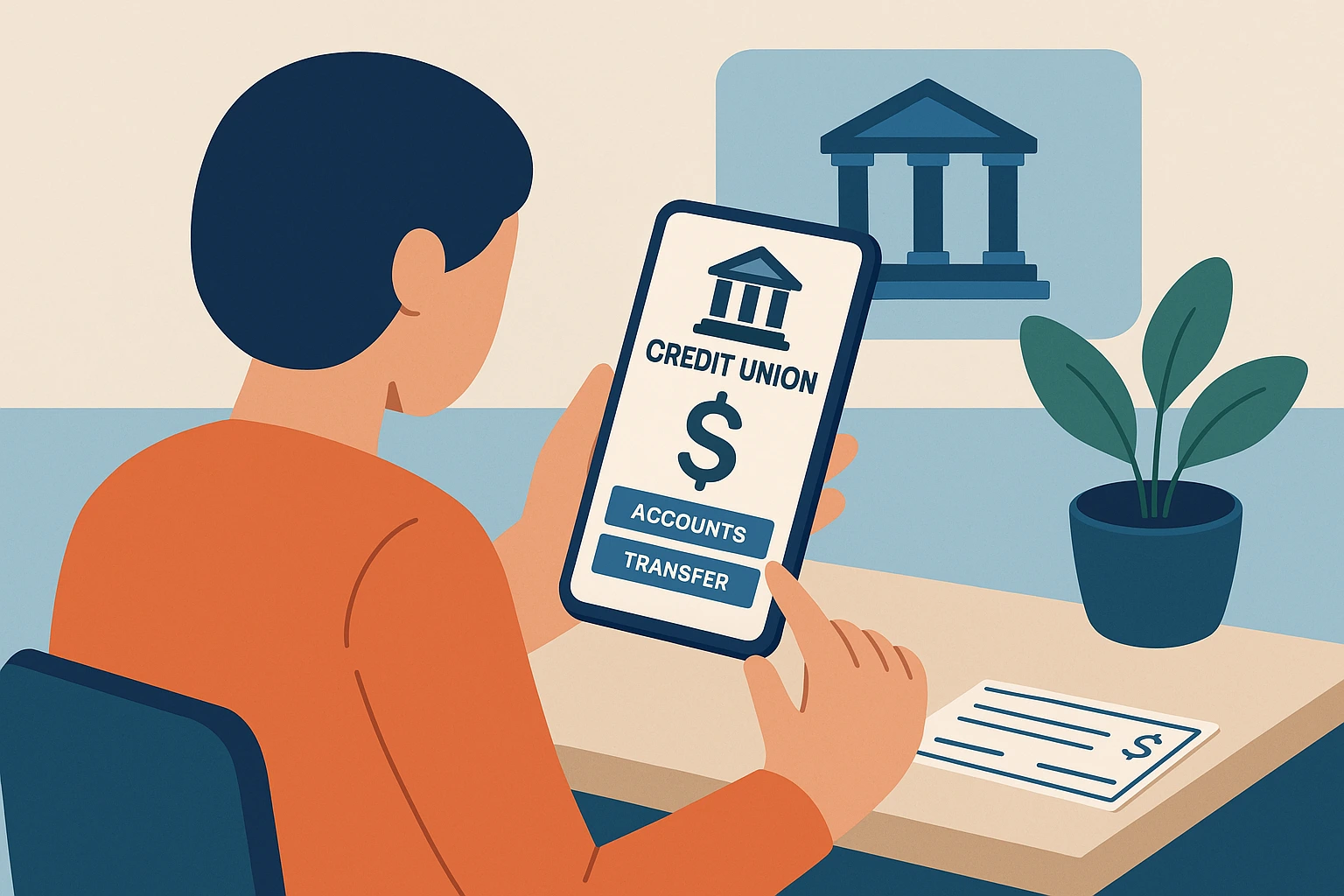
Digital banking is a core part of how people manage their financial lives today, and most credit union members rely on mobile apps and online portals for routine tasks. While credit unions often operate fewer branches than large banks, they offer a full range of digital tools designed to help members manage accounts efficiently, securely, and on their own schedule. For a full overview of available features, see our credit union online and mobile banking guide.
According to the Consumer Financial Protection Bureau, mobile banking has become the primary access point for many households, especially for balance checks, transfers, and fraud monitoring. Credit unions continue to expand their digital features to support this shift.
Key Digital Features Credit Unions Offer
Mobile Check Deposit
Members can deposit checks using their smartphone camera, eliminating the need to visit a branch. Deposit availability depends on the credit union’s policies, the check amount, and when the deposit is submitted. Many of these details are outlined in our broader credit union services guide.
Transfers and Bill Pay
Most credit unions offer internal transfers, external transfers, and online bill pay. These tools help members manage recurring payments and move money between accounts without delays. These services make digital banking more convenient for both daily tasks and long-term financial planning.
Account Alerts and Notifications
Members can enable alerts for low balances, deposits, withdrawals, payment reminders, and unusual activity. These alerts improve financial awareness and add a layer of security, helping members stay informed without needing to log in constantly.
Debit Card Controls
Most credit union apps include card management tools, such as the ability to lock or unlock a card, set travel alerts, and monitor card transactions in real time. These tools increase account security and offer members more control over their debit card use.
Digital Statements and Documents
Members can access online statements, tax documents, and account forms without waiting for physical mail. Digital delivery provides faster updates and long-term access to important financial records.
How Credit Unions Protect Digital Banking
Security is one of the most important aspects of online banking. Credit unions use modern authentication tools, encrypted connections, and fraud monitoring to protect accounts. The FDIC encourages consumers to use official mobile apps from their financial institution, reinforcing the importance of secure access. For additional member benefits and protections, explore our guide on credit union advantages.
Standard security tools include:
- Multi-factor authentication
- Biometric login (fingerprint or facial recognition)
- Device and location monitoring
- Automatic logout for inactive sessions
- Fraud detection systems and real-time alerts
Related Guides
Members who want to learn more about digital banking tools can explore:
- How Credit Unions Process Mobile Deposits
- Why Some Credit Union Transfers Take Longer to Clear
More digital banking resources will be added throughout the month as this section continues to grow.
Authority sources referenced: Consumer Financial Protection Bureau, FDIC.